
Events
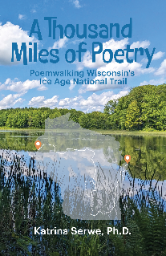
A Poem Walk at the Mulva Cultural Center
Join me at the Mulva Cultural Center in De Pere, Wisconsin for a Poem Walk on October 17 from 1:00-2:30 pm. This three-part event will include a poetry reading, a poem walk to forage your own words, and a writing session. Come for just the poetry reading or stay for the full event; you have options. The event is free, but signup is required. See the Mulva’s website for details.
MulvaCenter.org
A Poem Walk with Katrina Serwe
Join me for a Poem Walk at the Wisconsin Writer's Association Conference at the Maritime Inn Hotel in Manitowoc on Friday, October 23, 2026. This session is included with conference registration.
Step outside and discover how walking can open the door to creativity. In this interactive writing workshop, poet Katrina Serwe will introduce participants to poemwalking—the practice of moving through a place with the mindset of a poet. Inspired by writers who have long used walking as part of their creative process, participants will slow down, pay attention, and gather vivid sensory details from the world around them.
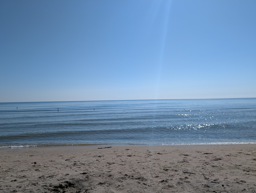
The group will walk along the lakefront from the Maritime Inn Hotel to Lighthouse Park and back, using sights, sounds, textures, scents, and passing thoughts as material for writing. After the walk, participants will draw from their observations to begin a prose poem, flash fiction piece, or other creative work.
No prior writing experience is needed—just comfortable shoes, curiosity, and something to write with.
Step outside and discover how walking can open the door to creativity. In this interactive writing workshop, poet Katrina Serwe will introduce participants to poemwalking—the practice of moving through a place with the mindset of a poet. Inspired by writers who have long used walking as part of their creative process, participants will slow down, pay attention, and gather vivid sensory details from the world around them.
The group will walk along the lakefront from the Maritime Inn Hotel to Lighthouse Park and back, using sights, sounds, textures, scents, and passing thoughts as material for writing. After the walk, participants will draw from their observations to begin a prose poem, flash fiction piece, or other creative work.
No prior writing experience is needed—just comfortable shoes, curiosity, and something to write with.
https://wiwrite.org/2026_conference
Great Lakes Writers Festival
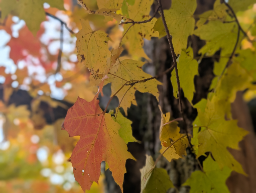
Join me on November 5th and 6th at Lakeland University for their Great Lakes Writers Festival. This fun event is free and includes opportunities to explore both poetry and prose! As part of the festivities, Thursday, November 5th I’ll be leading a poem walk at nearby Walla Hi County Park on the Ice Age Trail.
Registration is required for this free event.
Registration is required for this free event.
https://www.greatlakeswritersfestival.org/
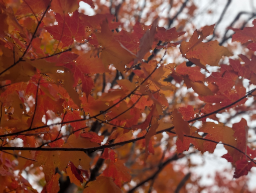
Southeast Wisconsin Festival of Books
Join me on November 7th for the Southeast Wisconsin Festival of Books. I will be on a panel for Poetry of Place. This fun event offers a lot of literary opportunities. You can learn more about the event and register on their website.
https://sewibookfest.com/saturday-november-7-schedule/
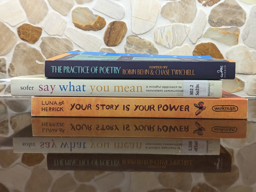
Discover the Joy of Found Poems: A Poetry Workshop
Thursday, November 12th, 5:30-7:00pm
Discover the Joy of Found Poems
at Lion's Mouth Bookstore and Coffee
211 N Washington St, Green Bay, WI
Poems are everywhere, just waiting to be found. Create a collage of the words that make up your day. Snap a picture of a poem you find already written in the wild. Mark up an existing text you love or hate to create something new…the possibilities for found poems are endless! Take time out to come to the bookstore and join me to play with words. Poets and people who do not yet know they are poets are welcome.
Discover the Joy of Found Poems
at Lion's Mouth Bookstore and Coffee
211 N Washington St, Green Bay, WI
Poems are everywhere, just waiting to be found. Create a collage of the words that make up your day. Snap a picture of a poem you find already written in the wild. Mark up an existing text you love or hate to create something new…the possibilities for found poems are endless! Take time out to come to the bookstore and join me to play with words. Poets and people who do not yet know they are poets are welcome.
https://lionsmouthbookstore.com/events/6344620261112
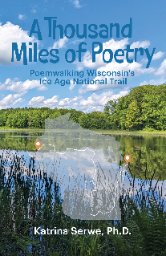
A Monthly Poetry Series & Open Mic: Featured Poet, Katrina Serwe
Join me at County Clare Irish Inn & Pub, 1234 N Astor St, Milwaukee, WI for a poetry reading on November 15th from 3:00-4:30pm for a poetry reading. The event is free and there is an open mic portion after the formal reading. It would be fun to hear some of your poems shared!
https://www.facebook.com/tabipopoetry
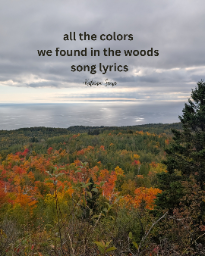
A Short Forms Workshop at the Mulva Cultural Center
Join me at the Mulva Cultural Center in De Pere, Wisconsin on Friday, November 20th from 5:00-7:00 pm for a short form poetry workshop. Learn how you can take a moment of inspiration, a moment of beauty, a moment of joy, a moment of insight, a moment you don’t want to forget and turn it into a moment you can savor and share through the ancient art form of haiku, senryu, and haiga. Registration is required and there is a fee. See the Mulva’s website for details.
MulvaCenter.org
Projects
Exploring Wetlands
There is much to learn from our wetlands. As they disappear, I want to bear witness and acknowledge the incredible work our wetlands do to support life on earth. There are many poems to be written.
Ice Age Trail: Merrimac Segment
The Wetlands
Ignored, disliked by some:
mosquitoes, nettles, gnats—
the wetlands’ work is undone
in bites if you get too close.
It’s stinky work they do
digesting overflow,
making dead ends into
new life in a slow flow.
Their stagnant pools reflect
the sky as mud pulls down
toxins to protect
our water, air and food.
Twice a year they host
migrations housed and fed.
These wastelands the most
productive places on earth.
Some fifty-million acres
now unprotected, lost
to Sackett*. Open to break,
rezone, repurpose, accost
nature to reform
for better use. Land left
for high and dry the norm,
floodwaters to flow in unrest—
erosion and displacement,
carbon pushed to the sky;
with food chains disrupted—
biodiversity dies.
Ignored, disliked by some:
mosquitoes, nettles, gnats—
the wetlands’ work—undone
in bites if you get too close.
from A Thousand Miles of Poetry (WWA Press, 2026)
*In SACKETT ET UX. v. ENVIRONMENTAL PROTECTION AGENCY ET AL.
No. 21-454 (2023) the Supreme Court changed the scope of the Clean Water Act
to apply only to wetlands that are “permanent bodies of water connected to
traditional interstate navigable waters” and have “a continuous surface
connection with that water.” This leaves an estimated previously protected
50,000,000 acres of wetlands open to potential development in the United States.
The Merrimac Preserve, which houses the wetland that inspired this poem, is
owned and operated by the Riverland Conservancy. The importance of places
like this that protect wetlands despite changing legislature are increasingly
important as stress on our environment continues.
Ice Age Trail: Merrimac Segment
The Wetlands
Ignored, disliked by some:
mosquitoes, nettles, gnats—
the wetlands’ work is undone
in bites if you get too close.
It’s stinky work they do
digesting overflow,
making dead ends into
new life in a slow flow.
Their stagnant pools reflect
the sky as mud pulls down
toxins to protect
our water, air and food.
Twice a year they host
migrations housed and fed.
These wastelands the most
productive places on earth.
Some fifty-million acres
now unprotected, lost
to Sackett*. Open to break,
rezone, repurpose, accost
nature to reform
for better use. Land left
for high and dry the norm,
floodwaters to flow in unrest—
erosion and displacement,
carbon pushed to the sky;
with food chains disrupted—
biodiversity dies.
Ignored, disliked by some:
mosquitoes, nettles, gnats—
the wetlands’ work—undone
in bites if you get too close.
from A Thousand Miles of Poetry (WWA Press, 2026)
*In SACKETT ET UX. v. ENVIRONMENTAL PROTECTION AGENCY ET AL.
No. 21-454 (2023) the Supreme Court changed the scope of the Clean Water Act
to apply only to wetlands that are “permanent bodies of water connected to
traditional interstate navigable waters” and have “a continuous surface
connection with that water.” This leaves an estimated previously protected
50,000,000 acres of wetlands open to potential development in the United States.
The Merrimac Preserve, which houses the wetland that inspired this poem, is
owned and operated by the Riverland Conservancy. The importance of places
like this that protect wetlands despite changing legislature are increasingly
important as stress on our environment continues.